Simple Breath Tools for Big Emotions (Ages 3–11)
Big Emotions Don’t Knock Politely
If you live with, teach, or spend any meaningful amount of time with children, you already know that they carry big emotions. Their emotions play out in many differet ways – tears, kicks, tantrums. These are a joy to watch sometimes but in those moments, most of us instinctively reach for words, offering well-meaning phrases like “calm down,” “take a breath,” or “you’re okay,”. Experience has probably taught us that none of these land particularly well when a child’s nervous system is in full survival mode.
The reason for this is simple: big emotions don’t live in the thinking part of the brain. In fact they don’t really live in the btain at all. They live in the body. Which means that logic, explanation, and reasoning won’t work once the emotion has really taken hold. What the body actually needs first is a sense of safety, and one of the most direct, accessible, and child-friendly ways to create that sense of safety is through the breath. This is why simple breath tools for big emotions can be so profoundly effective, not because they force children to be calm, but because they gently guide the nervous system back toward balance.
Breath Is Not About Stopping Feelings
Before we dive into some valuable techniques, it helps to understand a couple of things. Breathwork with children is not about stopping emotions, fixing emotions, or making uncomfortable feelings disappear as quickly as possible. They need to FEEL these feelings. Breathwork is about supporting children to move through what they are experiencing without becoming overwhelmed by it. Anger, sadness, frustration, disappointment, jealousy, and fear are not problems to be eliminated; they are part of being human. When we offer breathing tools, we are not saying, “Don’t feel this,” but rather, “You are allowed to feel this, and I’m here to help your body cope with it.” That changes everything.
Why Breathwork Works So Well for Children
One of the biggest reasons breathwork works so beautifully for children is that it alters the nervous system quickly in a way they can feel quickly. When breathing slows down and becomes deeper, the heart rate begins to settle, muscles soften, and the brain receives a powerful signal that danger has passed. This shift doesn’t require intellectual understanding or verbal processing, which makes breathwork especially suitable for younger children who don’t yet have the vocabulary to explain their inner world. The body leads, and the mind follows.
You Must Make It Playful
The golden rule when sharing breath practices with children: they must feel playful rather than prescriptive. The moment breathing turns into another instruction or demand, many children will resist, particularly when they are already dysregulated. When breathing is taught as a game, a story, or a piece of imaginative play, it becomes far more inviting and far less threatening. The aim is not perfection, but participation, curiosity, and gentle repetition over time.
Flower and Candle Breathing
One of the simplest and most loved practices is Flower and Candle Breathing. You invite the child to imagine holding a beautiful flower in one hand and a candle in the other. They slowly smell the flower through the nose, and then gently blow out the candle through the mouth. This naturally lengthens the exhale, which is key for calming the nervous system, while also giving the child something concrete and visual to focus on. I will always do the breathing alongside them, not just instructing, allowing your own calm breathing to set the rhythm.
Snake Breath
Another wonderfully effective tool is Snake Breath, where the child takes a comfortable inhale through the nose and then hisses like a snake on the exhale for as long as they can manage. The playful sound keeps children engaged, while the long, steady out-breath supports regulation and releases tension in the jaw, an area where many children hold stress without realising it. You can easily turn this into a light-hearted challenge by seeing who can make the longest, steadiest snake sound, which adds an element of fun without turning it into pressure.
Bubble Breathing
Bubble Breathing works especially well for children who love imaginative play. You invite them to pretend they are blowing the biggest, slowest bubble in the world, encouraging a gentle inhale through the nose followed by a slow, steady exhale through the mouth. The focus shifts away from “trying to calm down” and toward the task of blowing a beautiful bubble, which feels much safer and more achievable from a child’s perspective.
Belly Buddy Breathing
For children who benefit from visual and tactile feedback, Belly Buddy Breathing can be incredibly grounding. The child lies down and places a small cuddly toy on their belly, then watches the toy rise and fall as they breathe. Without using technical language, this naturally introduces diaphragmatic breathing and helps children connect with the physical sensation of breath in the body. It also creates a sense of companionship, which can be soothing for them.
Five Finger Breathing
Five Finger Breathing is another versatile option that works well across the age ranges. The child traces the fingers of one hand with the index finger of the other, breathing in as they trace up a finger and breathing out as they trace down. This combines movement, touch, visual focus, and breath in one simple practice, making it especially helpful for children who find it hard to sit still or concentrate.
Watch for full instruction here
Bumblebee Breath (Ages 5+)
For slightly older children, Bumblebee Breath adds a gentle humming sound on the exhale. The child breathes in through the nose and hums as they breathe out, feeling the vibration in their chest and throat. This vibration stimulates the vagus nerve, which plays a huge role in calming the nervous system, and many children find the sensation surprisingly soothing. It also happens to sound quite funny, which never hurts.
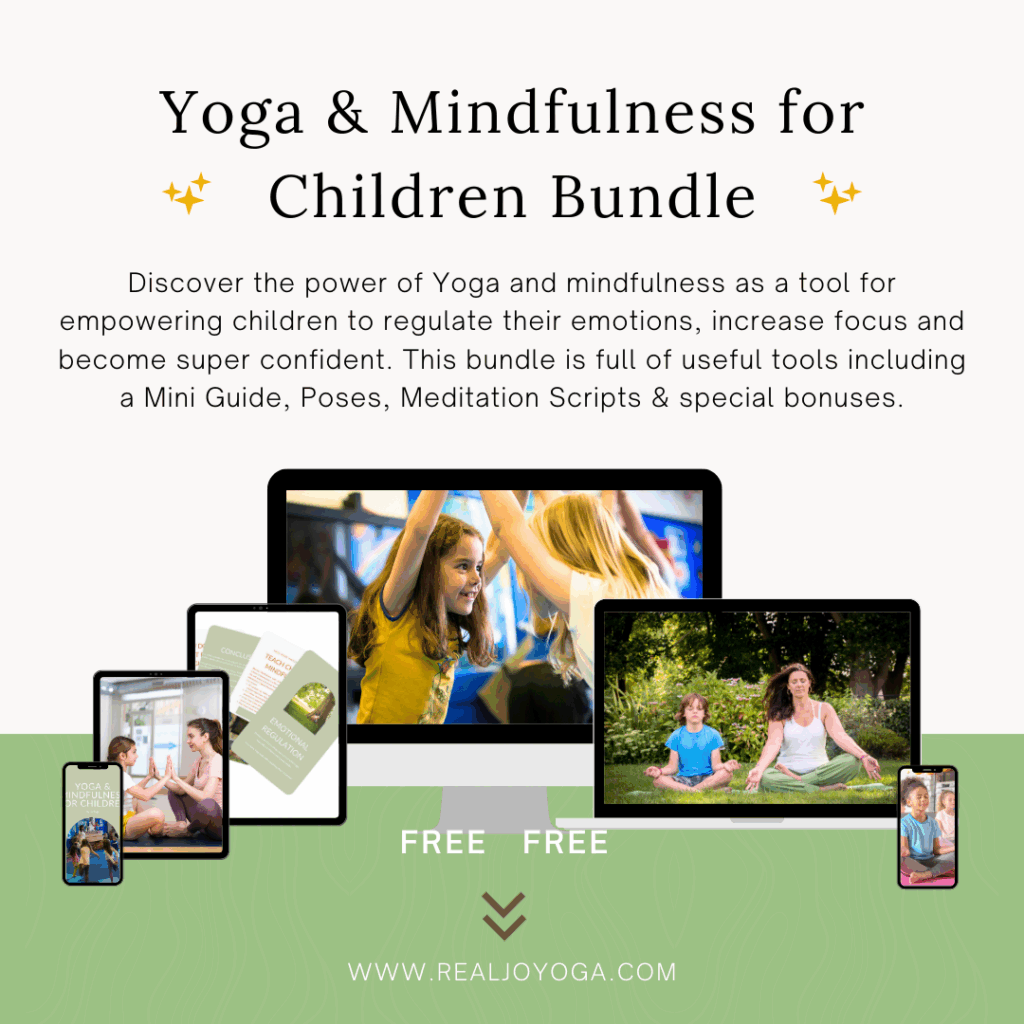
Yoga and mindfulness aren’t a “nice to have” for children anymore — they’re essential.
This is a practical, proven toolkit that helps children regulate big emotions, build focus, and grow real confidence from the inside out.
Inside this bundle you’ll find everything you need to support their mental and emotional wellbeing:
a Mini Guide, child-friendly poses, meditation scripts, and powerful bonus tools that can be used straight away.
Practice When Children Are Already Calm
While these simple breath tools for big emotions (ages 3–11) are invaluable in the middle of difficult moments, they become even more powerful when practised regularly during relatively calm times. Incorporating short breathing games into morning routines, circle time, transitions, or bedtime helps build familiarity and body memory. Over time, children begin to recognise these practices as safe and supportive, making it more likely they will accept them when emotions start to rise.
What If They Refuse?
It is important to acknowledge that sometimes children will refuse to engage, no matter how beautifully you present the tool. This is not a failure. In these moments, it can help to remove expectation and simply model the breathing yourself, perhaps saying, “I’m going to do some snake breaths to help my body feel better. You can join if you want.” Often, curiosity draws children in naturally, but even if it doesn’t, your own regulated breathing still contributes to calming the environment.
Regulated Adults Create Regulated Children
Children learn from watching and copying, which means they learn how to handle big feelings by experiencing safety in the presence of a calm adult. So by slowing your breath, and remaining calm, you are offering a powerful, lesson in emotional regulation.
Not Magic – But Deeply Powerful
Breathing tools are not magic wands, and they are not meant to turn children into permanently serene beings who never struggle. I mean, in all fairness, we need our children to experience their childhood fully, with all the emotions that go with it. These are practical supports that help children build awareness, resilience, and trust in their own ability to move through difficult experiences. Over time, these small practices become a tool kit that travels with them and a much larger foundation for emotional wellbeing.
Want More Support?
In my Mindfulness for Children training, I share many more playful, developmentally appropriate practices that combine breathwork, movement, stillness, and emotional awareness for children aged 3–18. Everything is designed to be realistic, simple, and easy to integrate into everyday life, whether you are a parent, teacher, or facilitator.
Big feelings are not a sign that something is wrong. They are a sign that something human is happening. When we offer children simple, compassionate tools like breathing, we are quietly teaching them one of the most valuable lessons of all: I can feel this, and I can get through it.
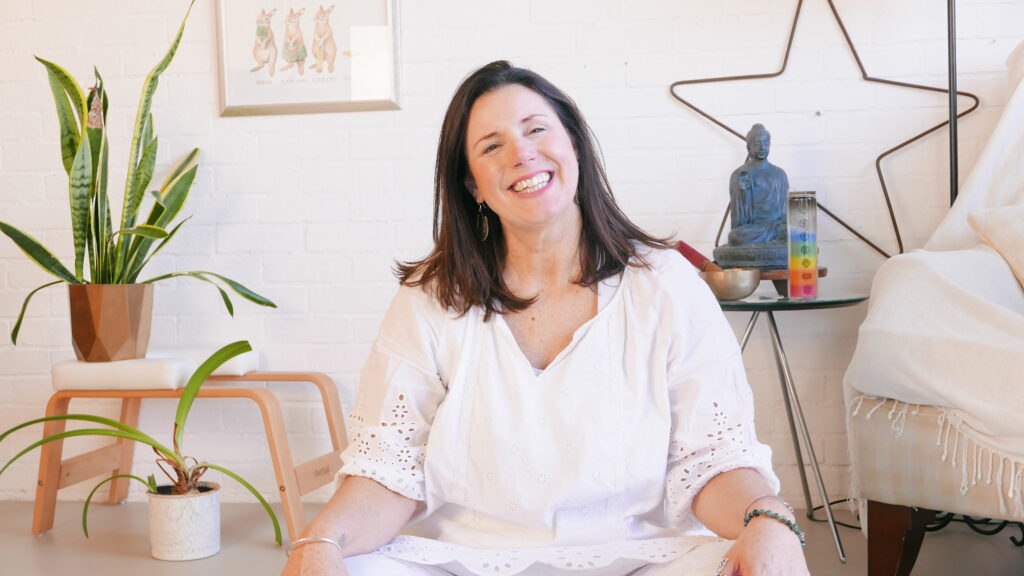
I am an Actress, Kundalini Teacher, Children’s Yoga Teacher and Mentor. I actively take Yoga into Schools to through the Mindfulness for Children Course I ensure our next generation know how to self regulate and live in peace.
As the founder of The Full Life Principle, and The Radiant Woman, I empower women everywhere to live a beautiful peaceful life based on their uniqueness and spiritual growth.
My passion is ensuring that you are able to practice your self-care and enjoy your spiritual journey. My You Tube Channel provides free guidance and classes.

