Why Self-Regulation Matters More Than “Calm Kids”
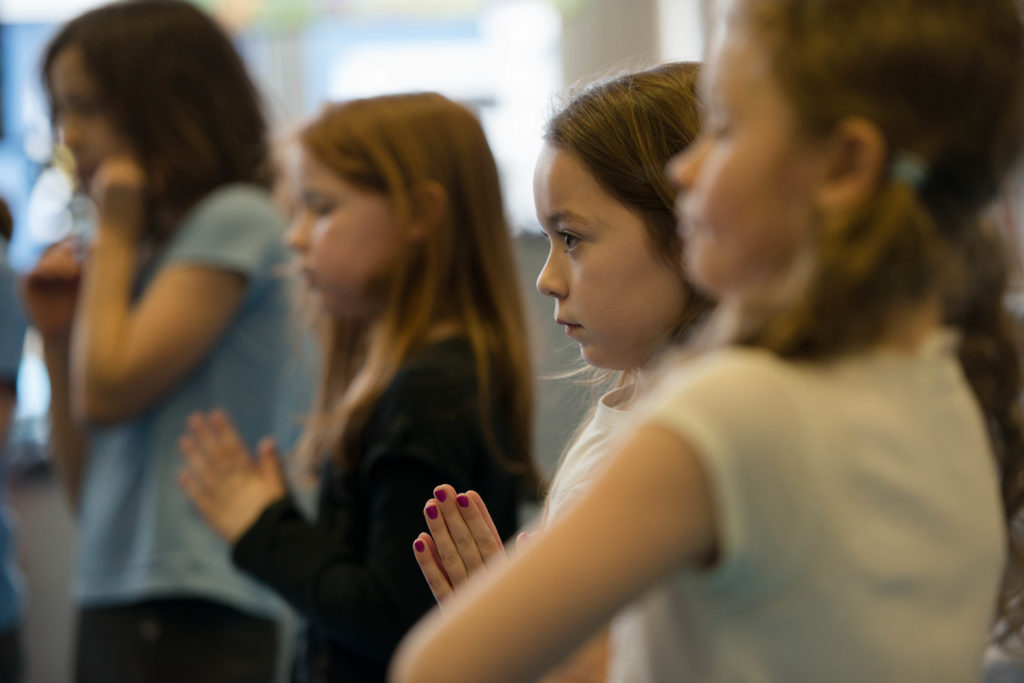
The phrase Calm Kids is everywhere.
It’s in classrooms, parenting books, wellbeing programmes, and across social media, all suggesting the idea that calm is the gold standard of childhood wellbeing. And on the surface, calm looks lovely. Calm looks peaceful. Calm looks like things are working.
But calm is not the same as regulated. When we place too much emphasis on creating Calm Kids, we can quietly miss what children actually need most.
What children truly need is not to be calm all the time, but to learn how to self-regulate — how to experience their emotions, move through them safely, and find their way back to balance with support.
That distinction changes everything.
The Hidden Problem With Chasing Calm
When we chase calm as the goal, we focus on stopping behaviour. We try to stop their tears, shorten their tantrums, smooth out anger, and move children as quickly as possible into a more ‘acceptable‘ emotional state. This obviously comes from care. But it usually comes from adults wanting life to feel easier, kinder, and more manageable for everyone involved.
But a child who looks calm is not always a child who feels safe.
Sometimes calm is actually a freeze response. Sometimes it is compliance. Sometimes it is a child learning that certain feelings are not welcome, and that those feelings need to be pushed down or hidden away.
So while Calm Kids may look settled on the outside, they may still be holding a lot on the inside.
Self-regulation, on the other hand, is not about looking calm.It is about feeling safe enough to be real.
What Self-Regulation Really Means
Self-regulation is the ability to feel what is happening inside your body, to recognise emotions as they arise, and to have some internal and external tools that help you stay with those sensations without becoming overwhelmed. It is the capacity to move through emotional waves rather than getting stuck in them.
A self-regulated child still gets angry. They still feel sad. They still experience fear, frustration, excitement, disappointment, and joy.
The difference is that, over time, they begin to trust that they can handle those feelings.
Not perfectly. Not independently, but safely.
Children Learn Regulation Through Relationship
One of the most important things to understand is that children are not born with self-regulation.
They are born needing co-regulation. We are a species that live for community and spend longer underthe care of adults more than any other species. And when not with parents we are with other adults (teachers, carers, relatives etc.)
In the early years, a child’s nervous system relies heavily on the nervous systems of the adults around them. Through being held, soothed, listened to, mirrored, and supported. With these actions a child’s system gradually learns what safety feels like. Repetition of these experiences slowly builds the internal wiring for self-regulation.
This means that expecting Calm Kids without first offering consistent regulation support places an unrealistic demand on children.
When a child is dysregulated, they are not being difficult. They are communicating. Their body is saying, “Something feels like too much right now.”
When Calm Becomes “Good”
In many environments, calm has become synonymous with good.
Quiet children are often praised. Still children are often rewarded. Expressive children are more likely to be corrected.
Over time, this can subtly teach children that some emotions are acceptable and others are not. That being easy to be around matters more than being honest about how they feel. That their role is to manage adult comfort.
This is not because adults are trying to cause harm. It is because many of us were raised the same way.
But when children grow up believing that only calm is acceptable, they often grow into adults who struggle to feel, struggle to express, and struggle to trust their inner world. Self-regulation offers a very different message.
It says, “All of you is allowed.”
Why Yoga and Mindfulness Support Self-Regulation
From a nervous system perspective, this makes deep sense.
When a child is in a stress response, their body is prioritising survival. In that state, higher-level thinking temporarily goes offline. This is why reasoning, lecturing, or explaining rarely works in the middle of a meltdown.
The body needs support before the mind can engage.
This is where yoga and mindfulness for children become so powerful, because they work directly with the body. Gentle movement, conscious breathing, rhythm, pressure, and playful awareness all help the nervous system shift towards safety.
Not by forcing calm.
But by creating the conditions where calm can naturally emerge.
The Heart of My Mindfulness for Children Course
This philosophy sits at the heart of my Mindfulness for Children course.
Rather than teaching children to “behave better” or “calm down”, the course focuses on giving them practical, age-appropriate tools to understand their inner world, recognise sensations, work with their breath, and use movement and stillness as supports.
It is about building foundations for emotional resilience, self-trust, and nervous system health that children can carry with them for life.
Because regulation is not a quick fix.
It is a skillset.
Calm Kids vs Regulated Kids
There is a big difference between Calm Kids and regulated kids.
Calm Kids may appear settled.
Regulated kids feel supported.
Regulated kids know what is happening inside them, even when it feels messy. They learn that emotions move. They learn that sensation changes. They learn that support is available.
And slowly, they learn that they have agency.
This builds resilience far more effectively than silence ever could.
A Simple Regulation Practice You Can Try
A very simple practice you can share with children is hand-on-heart breathing.
One hand rests on the heart, the other on the belly. The child is invited to breathe in through the nose and sigh out through the mouth, slowly and gently, a few times.
The language matters here.
Instead of saying, “Do this to calm down,” try:
“This helps your body feel safe with what you’re feeling.”
We are not trying to make emotions disappear.
We are teaching children how to be with themselves.
There are many practices – other can be found here.
The Role of the Adult Nervous System
It is also important to remember that children learn self-regulation primarily through relationship.
They learn it by being around adults who are practising it too.
Not perfect adults.
Not endlessly calm adults.
But adults who notice their own state, slow their breath, soften their tone, and take responsibility for their own nervous system.
Before asking a child to regulate, it is always worth asking:
“What is my body doing right now?”
Because regulation is not something we lecture into existence.
It is something we model.
A New Way to Define Success
When children are supported to develop self-regulation, the long-term impact is profound.
They tend to grow into teenagers who have language for their inner world, and adults who do not feel frightened by their own emotions. They are more likely to set boundaries, seek support, and navigate stress with greater flexibility.
This is not about creating Calm Kids.
This is about nurturing emotionally healthy humans.
Perhaps the question we need to ask is not:
“Is this child calm?”
But:
“Does this child feel safe?”
“Does this child feel seen?”
“Does this child feel supported?”
When those foundations are in place, calm often arises on its own.
Not as a performance.
But as a by-product of safety.
Calm Kids may look good from the outside.
Self-regulated kids feel good on the inside.
And it is the inside world that shapes a lifetime.
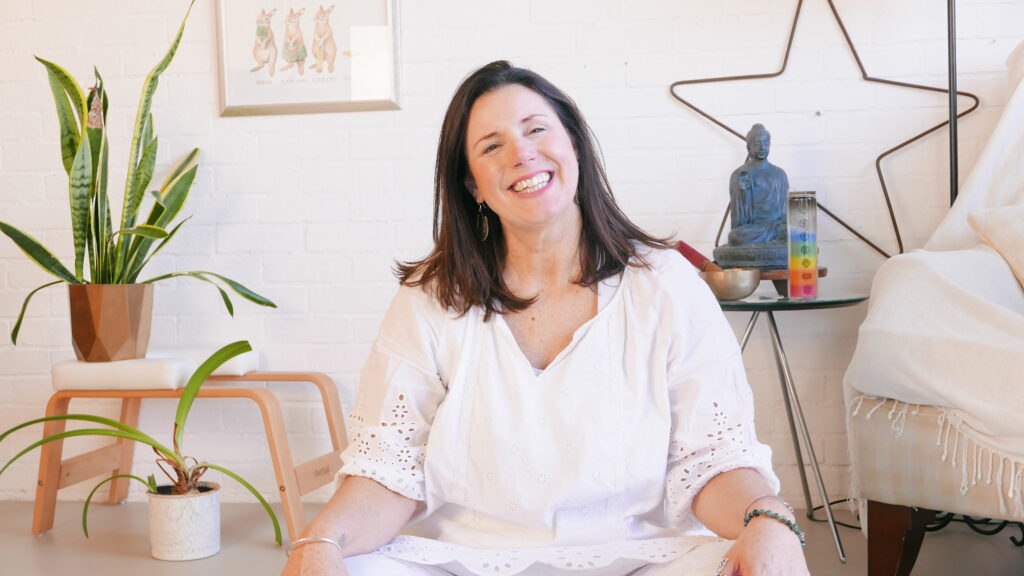
I am an Actress, Kundalini Teacher, Children’s Yoga Teacher and Mentor. I actively take Yoga into Schools to through the Mindfulness for Children Course I ensure our next generation know how to self regulate and live in peace.
As the founder of The Full Life Principle, and The Radiant Woman, I empower women everywhere to live a beautiful peaceful life based on their uniqueness and spiritual growth.
My passion is ensuring that you are able to practice your self-care and enjoy your spiritual journey. My You Tube Channel provides free guidance and classes.

